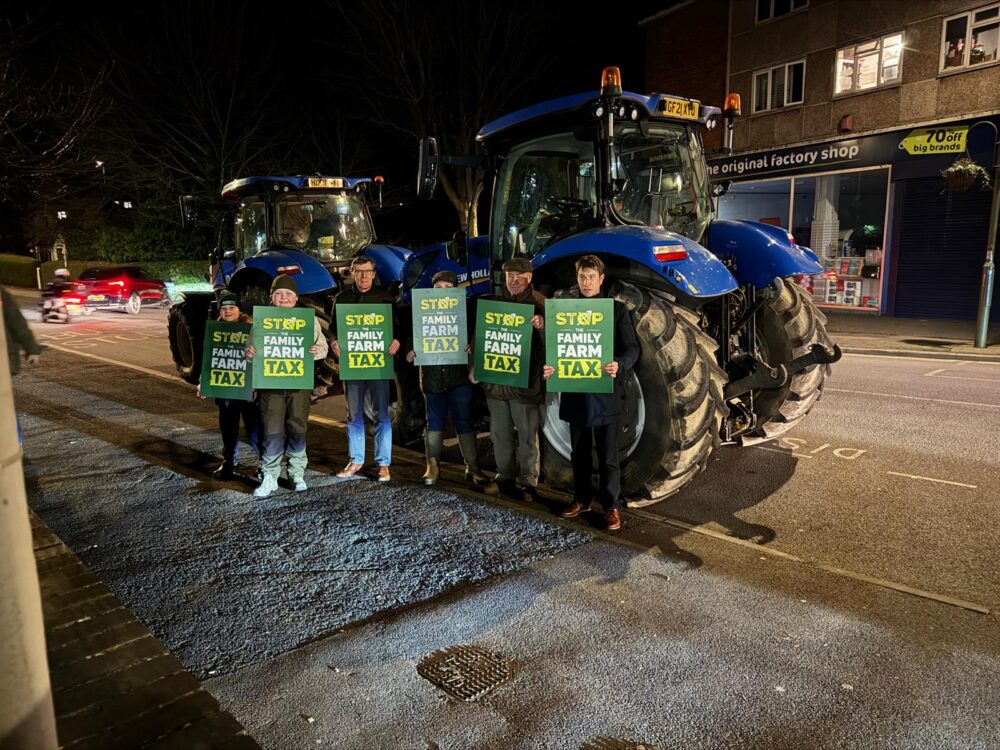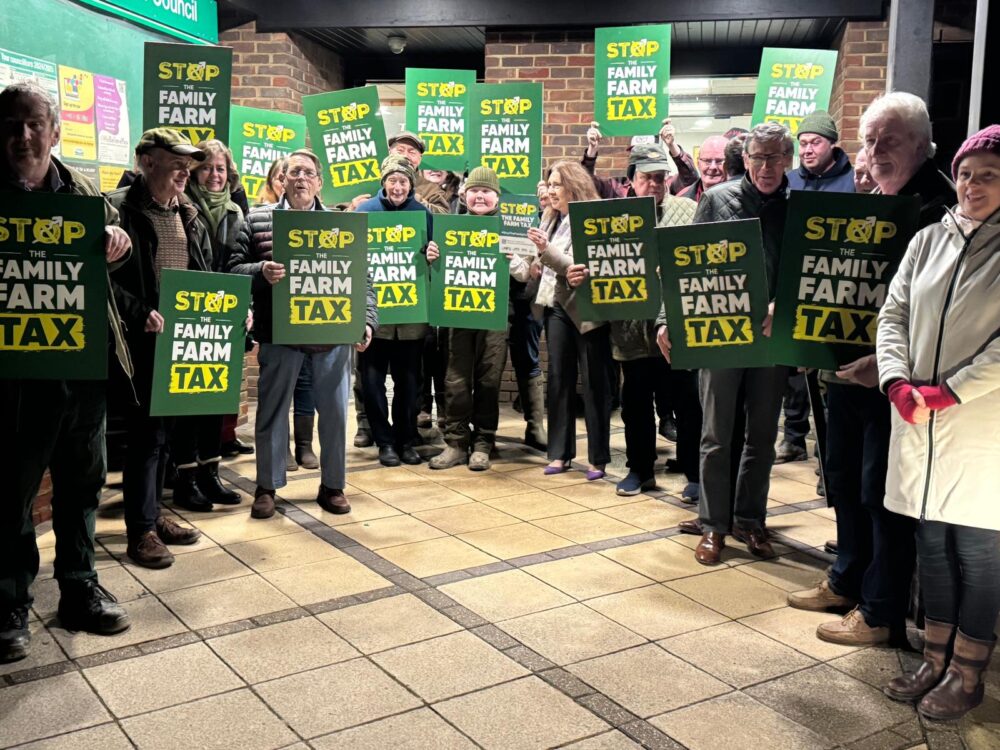

Tandridge District Council (TDC) has agreed a motion pledging its support to local farmers against government changes to inheritance tax relief in a meeting at council chambers.
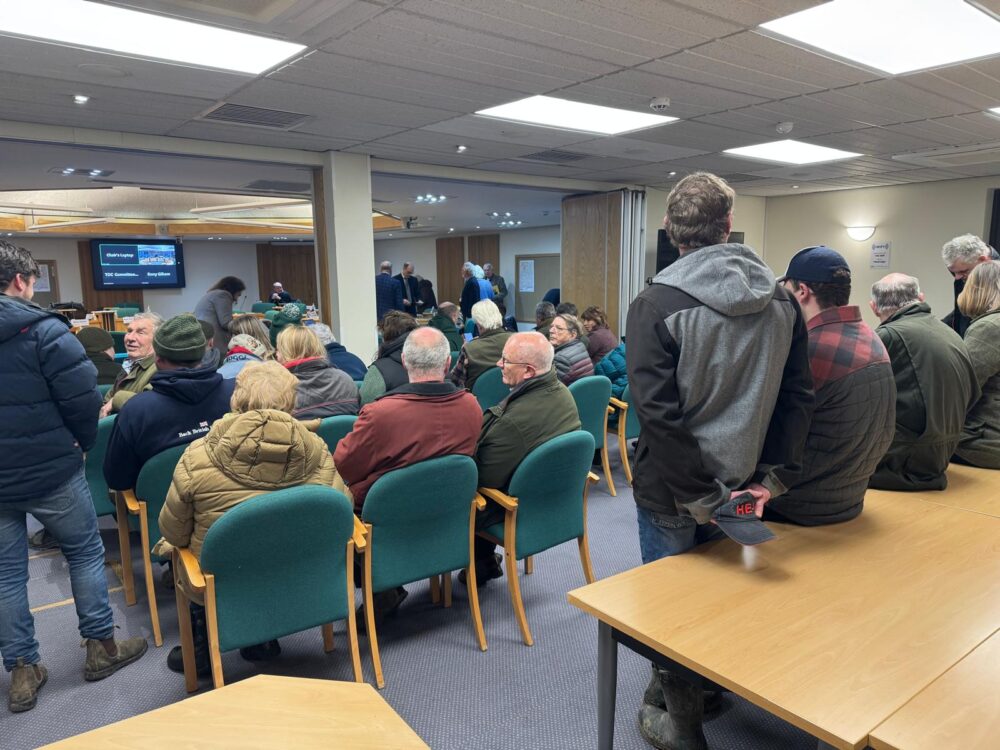
The motion, which was agreed by a majority vote, will see TDC commit its support to family farmers, as well as write to both Steve Reed MP, secretary of state for the environment, food and rural affairs, and East Surrey MP Claire Coutinho to express its concerns.
It will also look at how the council can engage with local farmers to consider what support they can provide to promote local farms and the purchase of local produce.
The chancellor of the exchequer Rachel Reeves announced in October’s budget that agricultural property relief (APR) would be reformed. APR is a tax break which decreases the amount of tax farmers have to pay when passing farmland to future generations.
It was stated that the full 100% relief from inheritance tax will be restricted to the first £1m of combined agricultural and business property, with changes coming into effect on 6 April 2026.
Cllr Helena Windsor, who put forward the motion,says the government’s decision could have a ‘detrimental impact on family farms’.
“The decision to subject family businesses to IHT on succession is reprehensible, particularly at the liability level proposed,” she said. “Where those businesses are family farms it is potentially catastrophic, both for the farmers and the land because, in farming, the return on capital invested in the farm is typically less than 1%; there is no money to pay the tax without selling off assets. I agree with the Rural Accountancy Group when they described the decision as ‘ill-thought-out’.
If this policy is not withdrawn or modified to spare the average family farms, then the future of Tandridge Greenbelt and the farmers, under whose stewardship it is cared for and nurtured, will be far worse than it already is due to the pressures that have affected the viability of farming over the years.”
Sally Roberts, chair of Oxted National Farmers’ Union (NFU), said:
“I don’t think that the tax in its current form is fit for purpose. It’s too broad. It encompasses far too many small farms that will not survive having to pay so much.
(The farms) won’t get passed down through the generations, and that is the only way you get people to stay within the industry. They think that others will come in, but they won’t.
Instead, I think we’ll lose a lot of farm land to a lot of inorganic things, such as houses and solar, and whilst those can benefit a lot of people, food is so important and it’s so valuable for this country to be self-sufficient, not fully self-sufficient, because we must always have international trade, but there must be a degree of self-sufficiency.
Within the budget, they (the government) also reduced the amount that we were receiving from the basic payment system. They immediately cut that. It was meant to be phased out and suddenly they’ve drastically taken it down to I think it’s £8,000, and that’s a real mega hit.
This will affect the food on people’s tables. There’s been a big drive to try and encourage people to eat British produce, and that’s what our meeting is about here today: trying to get people to support buying local British produce because it is literally the food on our plate that we get every day. Every single item has to be produced somewhere and we strive as a British farming community to create the best quality food that we can, with the highest welfare standards for our cattle and our livestock.”
After country-wide farmer protests in January, a government spokesperson said:
“Our commitment to farmers remains steadfast.
This government will invest £5 billion into farming over the next two years, the largest budget for sustainable food production in our country’s history. We are going further with reforms to boost profits for farmers by backing British produce and reforming planning rules on farms to support food production.
Our reform to Agricultural and Business Property Reliefs will mean farmers will pay a reduced inheritance tax rate of 20%, rather than the standard 40% for other businesses, and payments can be spread over 10 years, interest-free. This is a fair and balanced approach, which fixes the public services we all rely on, affecting around 500 estates a year.”
Are you a Tandridge farmer? Tell us how the Family Farm tax will affect you: newsdesk@tandridgeindependent.com.